18/12/2025
Micro Concrete: The Ultimate Solution for Structural Repair and Surface Strengthening
Md. Tanvir Islam Shawon
In modern construction and repair works, durability, precision, and performance are critical. One material that has gained significant popularity for repair, leveling, and strengthening applications is Micro Concrete. Designed for high-strength repairs where conventional concrete fails, micro concrete offers excellent flowability, shrinkage control, and long-term durability.
In this blog, we will explore what micro concrete is, its composition, applications, advantages, and why it is the preferred choice for structural repair projects.
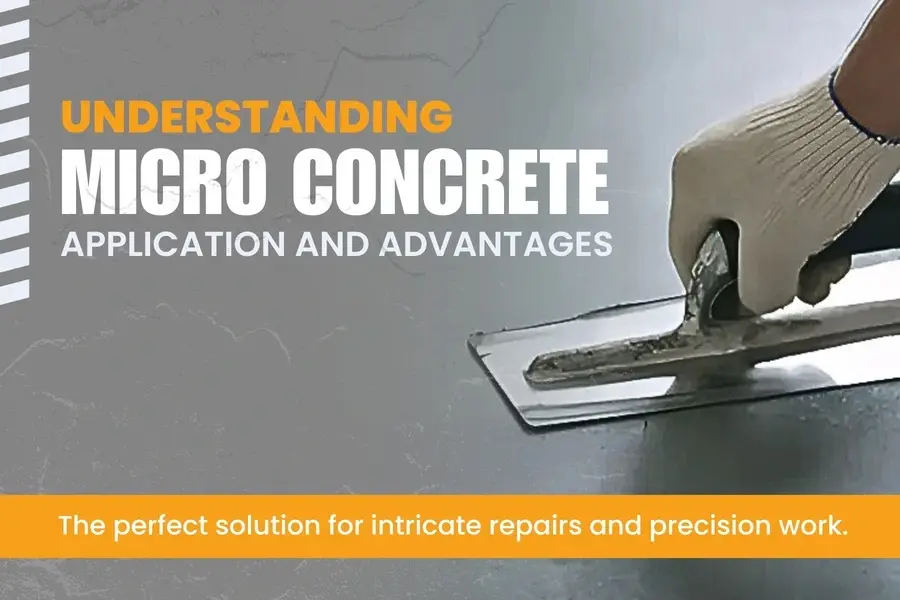
What Is Micro Concrete?
Micro Concrete is a high-strength, cementitious, flowable concrete repair material made with specially graded fine aggregates, cement, polymers, and performance-enhancing additives. Unlike traditional concrete, micro concrete can be poured or pumped into confined spaces without vibration, ensuring complete compaction and bonding.
It is typically used where access is restricted and high structural strength is required.
Key Components of Micro Concrete
Micro concrete is engineered for superior performance using a precise mix of materials, including:
-
Ordinary Portland Cement
-
Graded fine aggregates
-
Polymers and plasticizers
-
Shrinkage-compensating additives
-
Optional fibers for added strength
These components work together to produce a material with excellent flow, strength, and adhesion.
Applications of Micro Concrete
Micro concrete is widely used across residential, commercial, and industrial projects. Common applications include:
1. Structural Repairs
-
Column and beam jacketing
-
RCC slab and footing repairs
-
Bridge and flyover rehabilitation
2. Grouting & Void Filling
-
Filling honeycombs in concrete
-
Repairing voids under base plates
-
Equipment foundation grouting
3. Precision Repairs
-
Repairs in confined or inaccessible areas
-
Repair works requiring high early strength
4. Industrial & Infrastructure Projects
-
Power plants
-
Factories and warehouses
-
Marine and coastal structures
Advantages of Micro Concrete
Using micro concrete offers several advantages over conventional concrete:
✔ High Flowability
Self-leveling and self-compacting, eliminating the need for vibration.
✔ High Compressive Strength
Achieves superior strength, often exceeding traditional concrete grades.
✔ Shrinkage-Compensated
Minimizes cracking and ensures long-term structural stability.
✔ Excellent Bonding
Bonds strongly with old concrete and steel reinforcement.
✔ Easy Application
Ideal for complex and restricted repair zones.
✔ Durability
Resistant to chemicals, moisture, and environmental exposure.
Application Procedure of Micro Concrete
A typical micro concrete application involves the following steps:
-
Surface Preparation
Remove loose concrete, dust, oil, and contaminants. -
Formwork Installation
Ensure leak-proof shuttering to contain the material. -
Mixing
Mix micro concrete with potable water as per manufacturer guidelines. -
Pouring / Pumping
Place the material continuously to avoid air pockets. -
Curing
Proper curing ensures maximum strength and durability.
Where Should You Use Micro Concrete?
Micro concrete is ideal when:
-
Structural integrity must be restored
-
High precision repair is required
-
Vibration is not possible
-
Long-term durability is critical
It is especially recommended for aging structures, industrial repairs, and infrastructure rehabilitation.
Conclusion
Micro Concrete is a powerful, reliable, and efficient solution for structural repair and strengthening works. Its high strength, excellent flowability, and shrinkage-controlled properties make it a superior alternative to conventional concrete in demanding repair applications.
Whether you are repairing columns, beams, slabs, or foundations, micro concrete ensures long-lasting performance and structural safety when applied correctly by experienced professionals.
Latest News & Blog
Discover stories, innovations, and knowledge from our experts.